 English









Durban & Coastal Mental Health Engages Human Rights Commission and Proposes Inter-Governmental Policy Dialogue

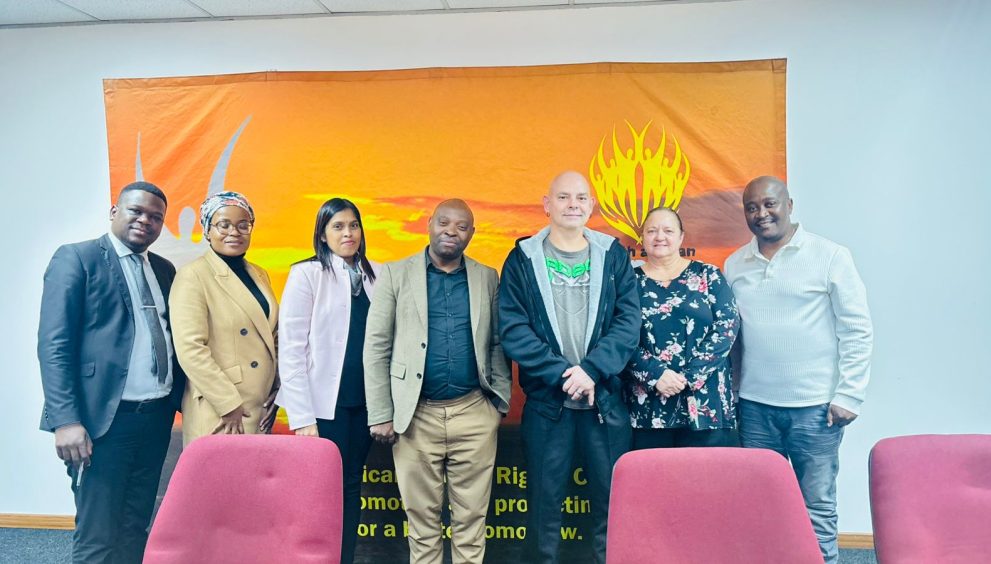
Durban, 10 June 2025 – Durban and Coastal Mental Health (DCMH), one of South Africa’s oldest and most expansive mental health organisations, met with the KwaZulu-Natal office of the South African Human Rights Commission (SAHRC) to present key challenges faced by mental health non-profit organisations and to propose a collaborative policy reform agenda.
Founded in 1940, DCMH operates over 20 facilities and provides vital care and services to individuals living with profound intellectual and psychosocial disabilities. The organisation offers permanent residential care to more than 300 individuals, daily care and developmental support to over 150 children with severe intellectual disabilities, and vocational training for over 600 beneficiaries through its protective workshops.
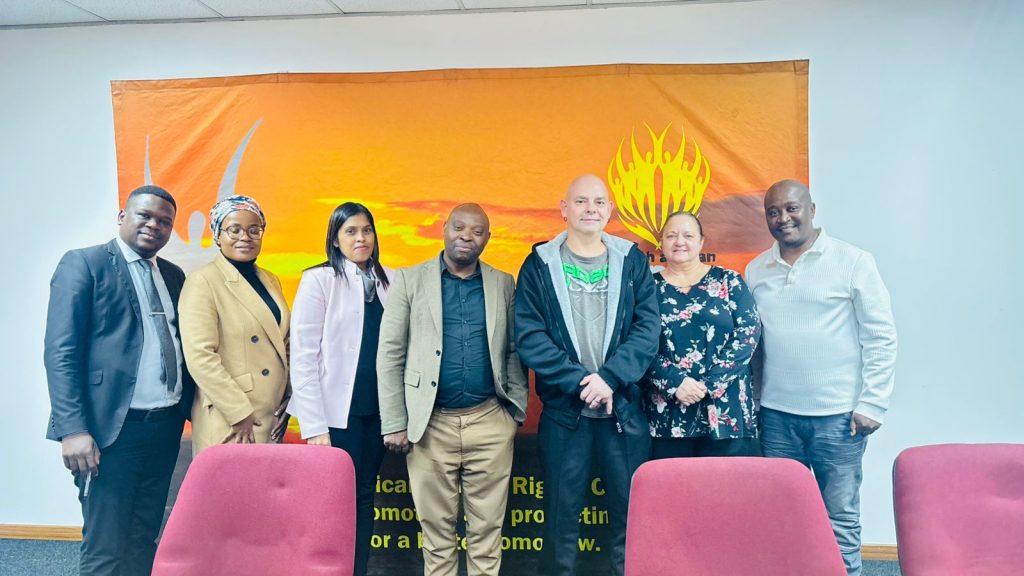
Leading the DCMH delegation, Board Chairperson Mr. Sthandiwe Mkhize together with DCMH CEO Mr Mbonisi Sibisi met with SAHRC Provincial Manager Ms. Pavershree Padayachee and her leadership team to outline systemic gaps in public policy implementation and to advocate for structured, intergovernmental engagement to ensure sustainable mental health reforms.
“Mental health is often treated as a reactive or emotionally charged issue. However, what is lacking is an integrated and sustained inter-sectoral forum to drive meaningful reform. Each time mental health services face a crisis, the public is shocked—not because the issues are new, but because the affected community is vulnerable and often overlooked,” said Mkhize. “There’s urgent work required across government, civil society, and regulatory bodies to institutionalise fair, rights-based policy frameworks.” According to Mkhize the National Health Policy Framework and Strategic Plan 2023 – 2030 highlights the lack of financing and notes that it poses the most significant challenge. Only 5% of the national health budget is allocated to Mental Health. This policy further commits to strengthening and developing of community mental health services before downscaling of psychiatric hospitals can proceed. The policy is ambitious however seems a total discord from reality as community-based mental health is heavily strickened by exorbitant – minimally subsidised operational costs. Community mental health services is estimated at just around 14% of the total mental health budget. ” So this is not only a Ministry of Health call but a call for a political will across the board” emphasised Mkhize.
Since appointed in 2021, Mkhize spearheaded a governance turnaround strategy at DCMH. Under his leadership, a new board was constituted with experts across disciplines, including a medical doctor, a PhD psychologist, a chartered accountant, strategy advisors, an occupational therapist, and legal professionals. Their collective expertise enabled the stabilisation of the organisation following years of unrest, strained stakeholder relations, and operational instability. Mkhize ,an active socio-economic development activist also participated in the working group towards the Draft Bill Protection of Persons with Disabilities Act of 2024 and also currently serves in the Presidential Working Group on Tourism & Investment Revitalisation of eThekwini Municipality. He has co-authored academic papers on economic development including leading a team that reviewed the current informal economy policy for eThekwini Municipality.Â
Since then, amidst an unfriendly macro-economic environment, DCMH has increasingly regained donor and stakeholder confidence as they secured funding, donation for beds, infrastructural repairs, solar power systems, and essential supplies amongst others. Testimony to stakeholder confidence, recently, a longstanding partnership with the Comrades Marathon 2025 was witnessed , with DCMH workshops being contracted to provide goods and services aligned with the event—offering meaningful work opportunities to intellectually disabled residents. Relationships with institutions of higher learning have been bolstered as existing University of KwaZulu Natal relationships brought about new relationship in the form of the upcoming exchange programme with the University of Pittsburgh and new potential research areas of cooperation were also opened.. Â
DCMH has survived numerous legislative transitions—from apartheid-era laws like the Lunacy Act and Mental Health Act of 1973 to the rights-based Mental Health Care Act of 2002. The latter marked a vital shift from custodial care to community-based service delivery focused on dignity and patient rights. DCMH has consistently aligned its programming with this modern legislative ethos.
Key Issues Presented to the Human Rights Commission
At the core of the engagement was the growing operational threat posed by disproportionately high utility bills—particularly electricity and water—affecting DCMH and similar NPO-run facilities. DCMH argues that these facilities, which care for vulnerable individuals with no family or social support structures, should receive the same consideration afforded to indigent households under existing public benefit schemes.
“We approached the SAHRC not only to address the urgent threat of disconnection but to appeal for their support in convening an intergovernmental forum. This forum should develop fair and inclusive policies that ensure NPO-run facilities are not excluded from the very subsidies that are meant to protect the poor,” Mkhize explained.
DCMH highlighted that while government offers food nutrition, transport, and housing subsidies and other prop-poor services to low-income South Africans, these benefits are not extended to persons residing in institutional NPO settings—despite their extreme vulnerability and dependence.
The SAHRC responded positively, committing to record DCMH’s submissions, assist in resolving the immediate utility crisis, at least in the interim and collaborate in establishing an intergovernmental consultative platform to address systemic policy barriers.
Leadership and Institutional Resilience
When asked why DCMH is well-positioned to lead such a policy reform effort, CEO Mr. Mbonisi Sibisi reflected on the leadership mandate given to him by the board in 2021:
“The board said clearly: we will back you up as new CEO — protect the rights of the residents, improve internal systems, reduce staff turnover, restore governance, stabilise the organisation, introduce international best practices and build constructive relationships with stakeholders. “Despite financial constraints, reduced subsidies, and rising operational costs, we’ve achieved over 80% of our turnaround goals. Our focus is now on a robust fund-raising programme ,reaching out to international sources of support, implementing the NPO’s investment sustainability programme whilst ensuring government policy makers starts interfacing with each other on these policy disparities .” ended Sibisi.
Sibisi credited the ongoing progress to the support of the board, dedicated staff, the parents’ association including the Joan Vaugn’s Lombard Family who accompanied the board to meet SAHRC, and cooperative and supportive public officials from Departments of Health, Social Development , Education and others.